

For community organizers, union representatives, and gig economy workers, communication is a crucial component of daily activities. Whether coordinating a shift swap, discussing a workplace condition, or mobilizing a community response, workers often utilize accessible digital platforms. When these tools experience delivery issues, it can disrupt organizational momentum. Encountering an error indicating that a message failed to send can cause concern, especially when time-sensitive information is involved. Navigating these digital roadblocks requires a systematic approach to help identify potential causes while keeping communication flowing.
When messages fail to deliver, a common reaction is to repeatedly attempt to resend them. However, delivery failures can be tied to specific technical limitations, account statuses, or broader network connectivity issues. Understanding potential reasons behind these failures can assist workers in resolving issues or finding alternatives. This approach to digital troubleshooting is somewhat similar to understanding procedural steps when a business changes hands—knowing the general framework can help you prepare. A structured troubleshooting process may assist in restoring communication channels efficiently while maintaining a professional organizing effort.
Checking Account Status and Access
A possible cause of a communication breakdown relates to account status. Before investigating hardware or network issues, it can be helpful to consider if the recipient’s account is active and able to receive messages. Messages may fail if the recipient’s account has been deactivated, deleted, or if privacy settings restrict incoming messages from certain users.
It is important to avoid inferring deliberate blocking or specific account statuses solely from a send error. A send failure is a generic technical response that does not confirm why the delivery was halted. When evaluating these scenarios, a comprehensive Messenger send-failure troubleshooting guide can offer general technical advice for addressing common application errors. Instead of making assumptions about profile status, focus on neutral, verifiable technical checks.
It is also possible that a sender’s account may experience temporary limitations. Automated systems sometimes flag unusual activity, such as sending a high volume of identical messages in rapid succession. To help maintain account standing, workers might consider pacing their communications or utilizing established group channels appropriately.
Practical Connectivity and Troubleshooting Checks
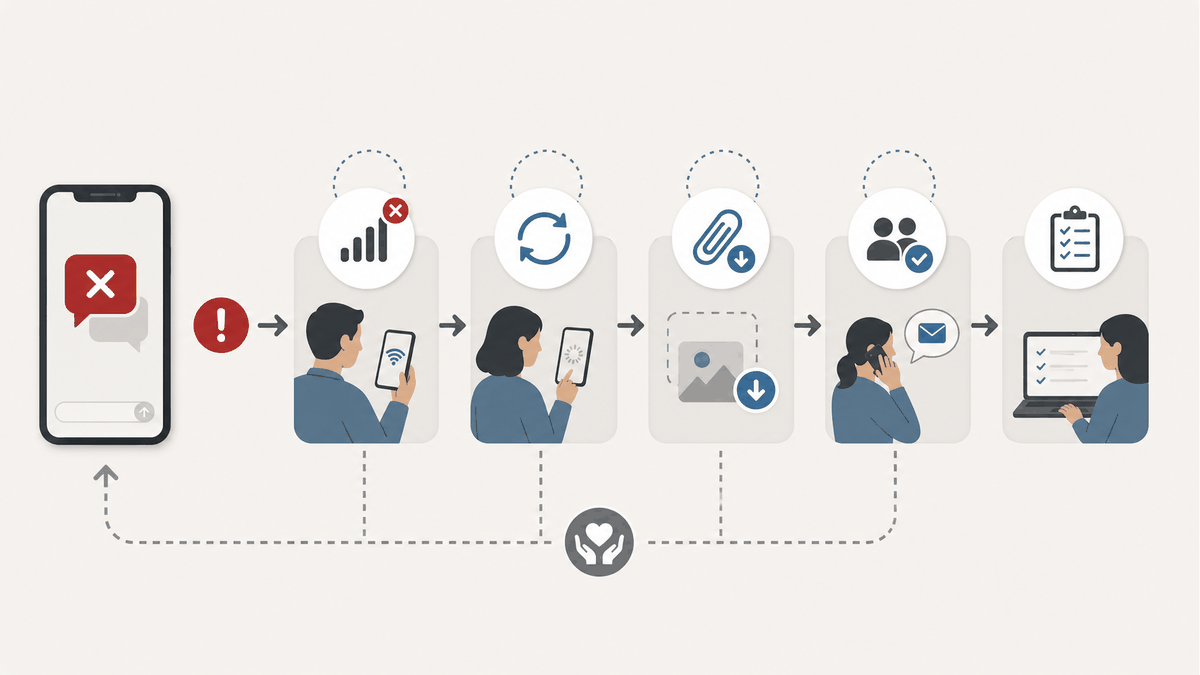
If account standing does not appear to be the issue, evaluating technical and connectivity constraints is a logical next step. These factors are common culprits for temporary message delivery failures.
When troubleshooting, it is important to review standard guidance. For instance, Meta recommends updating Messenger, using reliable Wi-Fi, checking device storage, closing/restarting, and reviewing account/group conditions when sends fail; it also says app/device/internet problems can be causes. Presenting these possibilities as potential issues rather than absolute proof of a single failure point helps narrow down the problem safely.
Additionally, Meta’s general troubleshooting steps include refresh/reopen, cache/browser checks on computers, app/network/update/restart checks on mobile, and reporting a problem if the issue persists. Using these neutral steps provides a clear path forward.
1. Verify Network Stability
In many workplaces, including industrial sites, warehouses, or large community centers, cellular data reception can fluctuate. A message may fail to send if the device temporarily loses its connection to the network. Workers can try checking their device’s network indicator, toggling airplane mode to refresh the connection, or switching to a stable Wi-Fi network before attempting to resend the communication.
2. Audit Attachment File Sizes
Organizers frequently share documents, photos, or videos. However, consumer messaging platforms impose limits on data transfers. If a worker attempts to send a high-resolution video or a large document, the system might reject the message if it exceeds the current file size limit. Workers should check current in-app limits within the platform’s help section. If a file is too large, they can try compressing it or utilizing an approved cloud-storage link instead.
3. Update the Application
Using an outdated version of a messaging application can occasionally lead to compatibility issues. If messages are consistently failing, checking the device’s app store for pending updates or restarting the application may resolve temporary glitches.
Tracking Issues and Safe Escalation
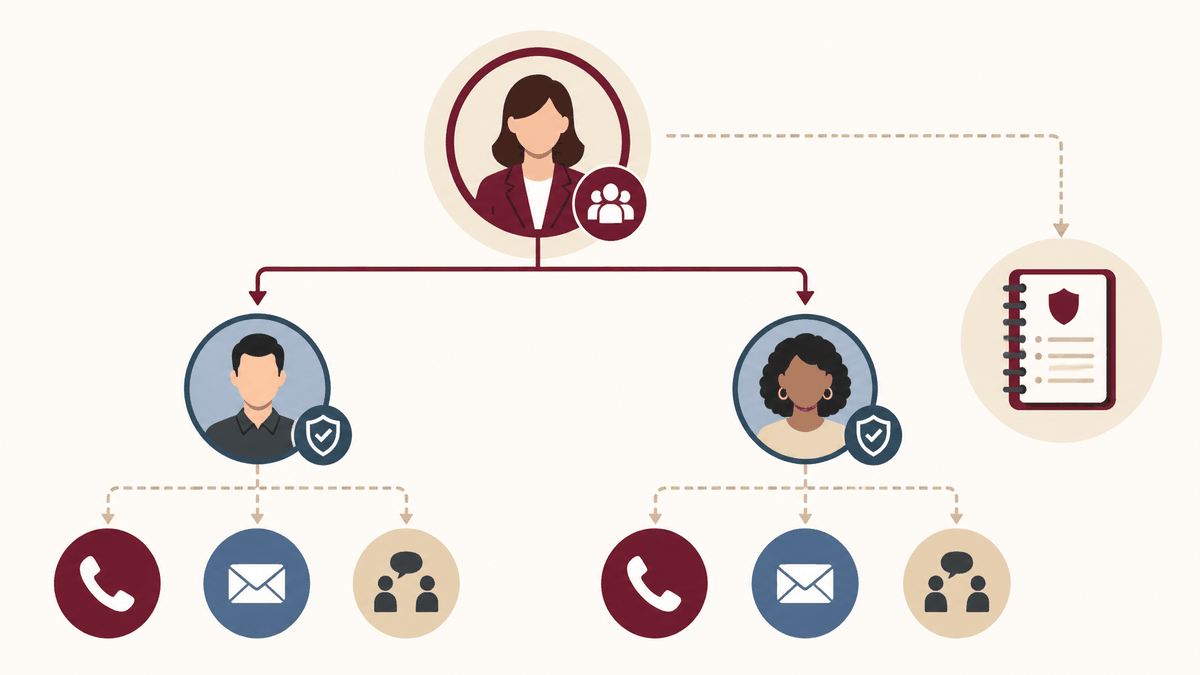
When technical troubleshooting steps do not resolve persistent communication failures, maintaining a timestamped incident log can be a highly practical administrative tool. Workers can briefly note the exact time a message failed, the type of connection used (cellular versus Wi-Fi), and whether an attachment was included. Creating this log helps identify patterns over time. For instance, if messages only fail during specific shift changes or when trying to attach specific document formats, the log provides helpful context when seeking further technical support. It keeps the focus on functional app performance rather than speculation.
If the issue remains unresolved, workers should consult a safe escalation checklist. First, verify the recipient’s availability through an alternative, approved communication method, such as a traditional SMS text or a direct phone call. Second, consider reporting the technical glitch through the app’s official ‘Report a Problem’ feature to notify developers of the error. Finally, inform your designated peer technical liaison or shift coordinator about the disruption so they are aware of potential delays. Using a structured fallback routine ensures that necessary organizing and coordination can proceed smoothly without relying on a single app’s performance.
Considerations for Consumer Messaging
While consumer messaging apps are highly accessible, they involve distinct considerations for workers and organizers. A primary consideration is the intersection of personal and professional data. When using a personal profile for organizational communication, workers should be mindful of their privacy settings and the information visible on their profiles.
Furthermore, consumer platforms are governed by the parent company’s terms of service. An organizing campaign relying heavily on a single platform should be prepared for potential technical outages or policy changes. This underscores the value of having secondary communication channels to help ensure that mobilization efforts can continue if a primary tool experiences downtime.
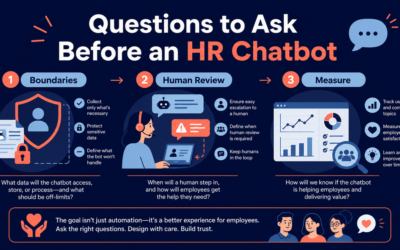
When organizations introduce new digital tools, workers should remain informed about how they operate. For instance, if management introduces automated systems, employees might ask questions about HR chatbots to better understand data handling and usage policies in the workplace.
Structured Troubleshooting
Digital communication tools are often utilized in labor and community organizing. When these tools experience errors, it can create friction. By adopting a neutral troubleshooting methodology—checking network connections, monitoring attachment sizes, updating applications, and verifying recipient contact through other routes—workers can address common delivery failures constructively. Acknowledging the technical limits of consumer platforms and maintaining human-escalation protocols can support continuous communication efforts.
Frequently Asked Questions
Why does my message display a send error?
A send error can indicate several issues, including a temporary network disconnection, an outdated application, an attachment that exceeds file size limits, or a recipient account that is currently unavailable to receive messages.
Does a send error mean I have been blocked?
Not necessarily. A send error is a generic technical response and should not be used to infer deliberate blocking. It can simply mean the recipient’s account is deactivated, or there is a connectivity issue.
What should I do if my attachment won’t send?
Messaging apps have varying file size limits for attachments. Check the current in-app limits in the platform’s help section. You can try sending a smaller, compressed file or using a link to an approved cloud storage service.
How can I contact a colleague if the messaging app is failing?
It is recommended to use a secondary communication channel, such as a traditional SMS text message, an alternative approved messaging application, or a direct phone call, especially for time-sensitive information.

0 Comments