
As organizations integrate new technologies into their operations, employees frequently encounter systems designed to streamline workplace processes. Among these, HR chatbots are increasingly deployed to answer routine benefits questions, direct workers to policies, or assist with basic scheduling. While automation offers quick access to information, introducing an HR chatbot requires evaluation by workers, representatives, and stakeholders to ensure it respects workforce expectations. When an organization proposes an automated conversational agent, workers have a valid interest in asking about the system’s design, data handling, and safeguards to protect employees.
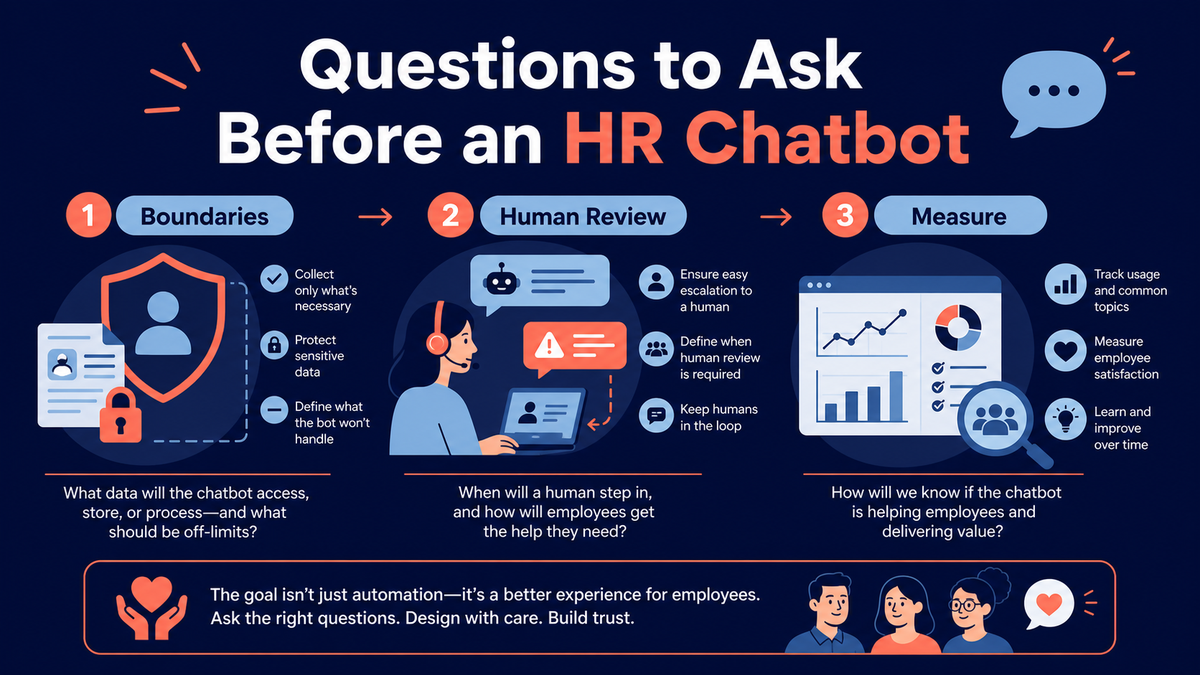
Defining the Scope and Purpose of Automation
Before an HR chatbot goes live, it is essential to establish a documented scope of its capabilities. What is the tool designed to do, and what is it restricted from doing? A defined scope ensures the technology is used for administrative purposes rather than overstepping into areas requiring human empathy. For example, a chatbot might help an employee find a holiday calendar, but it should not interpret nuances of a leave of absence or counsel a worker through a workplace conflict.
Workers should seek clarity on the scenarios the chatbot is trained to handle. Requesting a formal statement detailing the use cases is beneficial. This transparency aligns with principles found within an employee rights at work guide, empowering individuals to navigate their environment with confidence.
Establishing Sensitive Data Boundaries
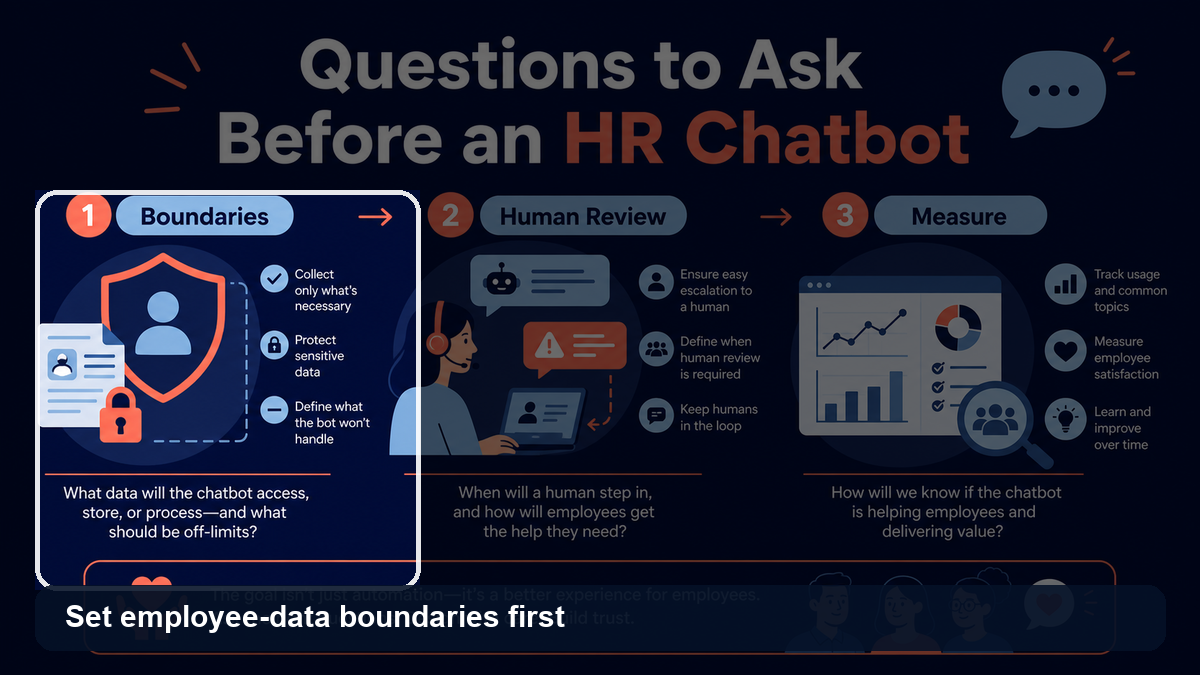
A critical area of inquiry involves the handling of sensitive data. HR departments process confidential information, including medical and financial details. When a chatbot serves as an interface, workers must ask how the system processes and protects shared information.
Organizations should articulate data retention policies. Are transcripts saved indefinitely? Who has access? Furthermore, it is crucial to determine whether data entered is used to train language models, potentially exposing details to third-party vendors. Employees should receive guidelines on what information is appropriate to share with the tool versus a human resources professional.
Strict Exclusions from Employment Decisions
A fundamental safeguard is ensuring automated tools never influence employment decisions. Chatbots lack the nuance and context required for hiring, termination, promotions, or disciplinary actions.
Automated systems can inadvertently perpetuate biases. The Equal Employment Opportunity Commission has emphasized caution regarding algorithmic tools disadvantaging individuals with disabilities. For details, stakeholders can review the EEOC disability-discrimination warning.
Workers must insist on written commitments that the HR chatbot is an informational resource and excluded from performance evaluations. An employee’s interactions with the system should not impact their employment status.
Notice, Transparency, and Documentation
Employees have a right to know when they are interacting with an AI system. The chatbot should be clearly identified as automated at the beginning of every interaction.
This transparency is highlighted in the NIST AI Risk Management Framework, which advocates for clear communication regarding AI capabilities. Employers should provide documentation before launch outlining how the system works and policies governing its use. Providing this proactively fosters trust. Significant updates to capabilities should also be communicated to the workforce.
Accessibility and Reasonable Accommodations
Any tool deployed for general use must be accessible to the entire workforce. When evaluating a chatbot, ask how the organization ensures it is usable by employees with diverse abilities, including compatibility with screen readers and clear responses.
If an employee cannot use the chatbot due to a disability, the organization must provide an accessible alternative without causing delay. The introduction of an automated tool should never create new barriers to accessing essential employment information.
Human Escalation and Error Reporting
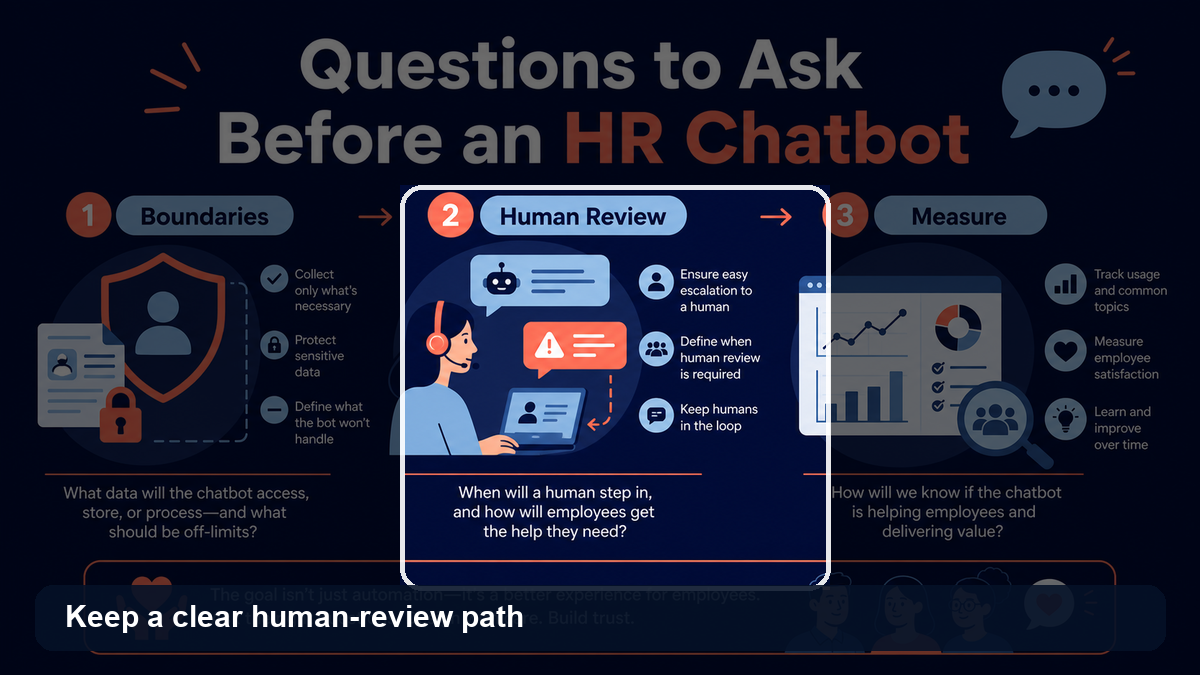
No automated system is flawless. Chatbots can misinterpret questions or provide inaccurate information. Therefore, a path to human escalation is a necessity. If an employee asks a question the chatbot cannot answer, the system should offer an option to transfer the conversation to a human.
The NIST human-AI interaction guidance stresses designing systems that allow for human oversight. Workers should never feel trapped in a loop with an automated system.
Additionally, there must be a mechanism for reporting errors. If a chatbot provides incorrect policy information, an employee should be able to flag it. Reporting such issues should be protected, and resources discussing workplace retaliation signs, protected activity, and documentation provide valuable context.
Structuring a Pilot Review Period
Organizations should avoid implementing new AI tools across the entire workforce at once. A structured pilot review allows a smaller group to test the system, identify issues, and provide feedback on utility and safety.
A pilot period should have metrics for success and a defined end date, after which a formal review is conducted. For stakeholders looking to assess such tools during a trial, consulting a detailed HR chatbot evaluation guide can offer a structured approach to identifying potential risks. This evaluation ensures the technology serves as a beneficial resource.
Workplace Technology Review Checklist
To assist workers in evaluating a proposed system, this table outlines key areas of inquiry.
| Evaluation Category | Key Focus Area | Ideal Organizational Standard |
|---|---|---|
| Scope and Purpose | Defined limitations of the tool | Written policy restricting the chatbot to routine administrative tasks only. |
| Data Privacy | Retention and usage of chat logs | Clear boundaries on data storage; transcripts are not used to train external models. |
| Employment Decisions | Influence on HR outcomes | Explicit guarantee that the system has no involvement in performance reviews or hiring. |
| Accessibility | Usability for all employees | System is audited for compliance with recognized accessibility standards prior to launch. |
| Human Escalation | Availability of human support | Immediate option to connect with a live HR professional during operating hours. |
| Error Correction | Mechanism to report issues | A simple process for workers to flag inaccurate information provided by the system. |
Essential Questions to Bring to Employer Representatives
When an organization announces an automated HR assistant, workers should be prepared to ask constructive questions. For instance, if an employee needs to clarify employee break laws and federal or state rules, they need to know if the chatbot’s answers are considered official company policy.
- What specific types of questions and tasks is this chatbot explicitly authorized to handle, and what is it prohibited from performing?
- Will the conversations employees have with this tool be logged, and if so, how long are they retained?
- Is any data entered into this system used to train artificial intelligence models managed by third-party vendors?
- Can the company guarantee interactions with this tool will not be used to evaluate employee performance or influence employment decisions?
- What testing has been conducted to ensure this tool is fully accessible to employees who use assistive technologies?
- If the chatbot provides incorrect information that an employee relies upon, how will the company resolve the discrepancy?
- What is the process for bypassing the automated system to speak directly with a human resources representative?
- Will there be a limited pilot program to test the system before it is rolled out, and how will feedback be incorporated?
Frequently Asked Questions
Are employers required to tell workers if they are using an AI chatbot?
Transparency is a recognized best practice. While legal requirements vary, organizations should notify employees when they are interacting with an automated system to maintain trust and prevent misrepresentation.
Can an HR chatbot be used to evaluate employee performance?
No. Automated conversational tools are designed for retrieving information and handling routine inquiries. Organizations should strictly prohibit the use of chatbot interaction data in performance reviews.
What should a worker do if a chatbot gives them wrong information about company policy?
Workers should immediately use the human escalation feature to speak with a live HR representative. It is also advisable to report the error through the designated feedback channel so the system can be corrected.
Is it safe to share medical or sensitive personal data with an HR chatbot?
Employees should exercise caution. Before sharing sensitive information, workers must ask about data retention policies and whether data is used to train third-party AI models.
Must the employer provide an alternative if a worker cannot use the chatbot due to a disability?
Yes. Employers must ensure workplace tools are accessible. If a system is not fully accessible, the organization is expected to provide an alternative method for the worker to access the same services without undue delay.


0 Comments